
Your first tent festival is coming up: You’ve got your ticket, the crew is making plans in the group chat, and amid the excitement and slight nervousness, one question keeps popping up: How do you survive three nights in a field where thousands of people are camping, partying, and searching for coffee at seven in the morning all at the same time? The good news: Festival camping isn’t rocket science, it’s just a handful of decisions that, once you get them right, will benefit you all weekend long. This guide walks you through everything that happens between arrival and breakdown: from choosing a campsite to setting up your sleeping area, right up to the moment your tent turns into a sauna in the morning.
Choosing a campsite: The most important decision of the first half hour
When the gates open, everyone rushes in. Let them rush. The best spots aren’t the ones closest to the entrance, but the ones chosen most wisely. Rule number one: not right next to the path. What looks practical during the day turns into a racetrack at night: people trip over your lines, have conversations right next to your head at four in the morning, and kick your tent pegs in the dark.
Rule number two: don’t pitch your tent in a depression. Check the ground before you set up. Depressions may seem sheltered from the wind and cozy, but they’re the first places water collects during a thunderstorm, and then your sleeping bag will be floating. A slight rise or at least level ground without a drainage channel is worth its weight in gold. And find a landmark: a flagpole, a conspicuous pavilion, anything you can spot again at three in the morning. Thousands of tents look exactly the same in the dark.
Pitching Basics: Once the Tent Is Up, the Weekend Is Set
Set up your tent completely one time before you leave. Seriously: A test setup in your yard or at the park will save you time, arguments, and a crowd at the campsite. You don’t want to figure out for the first time, just as the wind picks up, which pole goes into which slot and why one corner just won’t stay taut.
Pack a rubber mallet and a few spare tent stakes, because festival grounds are either rock-hard or soft as butter, rarely anything in between. Tighten all the guy lines properly, even if no wind is forecast: weather reports are just rough guidelines at festivals. And coordinate with your neighbors before someone sets up their canopy straddling two tent boundaries. Five minutes of coordination saves three days of diplomacy.
Timing is more important than muscle strength: Set up camp while you’re still fresh, right after you arrive and before the first toast. In the midday heat, every tent pole becomes a struggle, and in the dark, a five-minute job turns into a group effort with an audience. Drink water while setting up, not just beer, and have your tools and tent stakes ready before you unroll the tarp. If you finish setting up your camp within the first hour, you’ll spend the rest of the day hosting guests instead of working on a construction site.
Your Sleeping Setup: The Sleeping Pad Is the Real Star
The classic beginner’s mistake: spending your entire budget on a tent and nothing on the ground. But your sleeping pad is what determines whether you’ll actually get any sleep. The ground drains the heat from every muscle at night, even in the middle of summer, and a thin blanket doesn’t change that at all. A decent sleeping pad insulates and cushions: the difference by the second morning is huge.
This includes a sleeping bag suitable for the season, earplugs, and a sleep mask, because it’s never completely quiet at the campground, and once the sun rises, it never gets dark again. A bag full of clothes doubles as a pillow, and an extra sweater at your feet is your insurance against a surprisingly cold night. The more you sleep, the longer you can dance, it’s that simple.
Camp Kitchen and Valuables: Carry Less, Think Smarter
You don’t need an outdoor kitchen, you need a system. Plenty of water, plus snacks that can withstand the heat: nuts, energy bars, bread, and fruit with thick skins. Whether gas stoves are allowed is up to each event organizer, so check beforehand instead of arguing about it on-site. The food stands on the grounds will take care of everything else, and honestly, after two hours of sleep, that camp breakfast tastes better anyway when someone else has made it.
When it comes to valuables, the logic is simple: Your tent is a fabric bag with a zipper, not a safe. Anything that would really hurt to lose, like your ID, cards, and cell phone, should stay on your person, even at night, preferably in a fanny pack. Divide your cash between two hiding spots, and don’t bring expensive electronics at all. And leave your tent so that it doesn’t look like a target: a gaping emptiness deters thieves more than any lock.
Camp logistics also include basic hygiene supplies: wet wipes, hand sanitizer, and a water canister for brushing teeth and a quick wash. The lines for the showers are longest in the morning and shortest in the evening, and on some days, the combination of a water canister, wipes, and a fresh shirt is the more realistic alternative to a shower. No one expects a spa out in the fields: it’s perfectly fine if you can still smell yourself and smile about it.
Neighborhood Etiquette: Festival Camping Tips for Being a Good Neighbor
For three days, the campground is your street, your neighborhood, your city. And as always: If you say hello, you’ll go a long way. Introduce yourself briefly while setting up, and the rest will take care of itself, from borrowing a bottle opener to someone keeping an eye on your tent while you’re waiting in line for the shower.
Noise is a matter of common sense: Partying at the camp is part of the experience, but blasting music at six in the morning right next to people who are sleeping is not. Respect trails and leash rules, don’t “borrow” anything that hasn’t been offered to you, and keep the universal tool for good neighborly relations on hand: duct tape. It fixes tent poles, shoe soles, air mattresses, and, when in doubt, even strained relationships.
“Front Row isn’t about where you sit; it’s an attitude: It doesn’t start at the stage, but with how you carry yourself at the campground.”
Morning Heat: The Ultimate Challenge at Every Tent Festival
No one warns you about the real test of endurance, because it doesn’t come at night, it comes in the morning. Starting around eight or nine o’clock, the sun turns your tent into an oven, and you have exactly two options: head out into the dust or melt away inside. After so little sleep, both options feel pretty unfair.
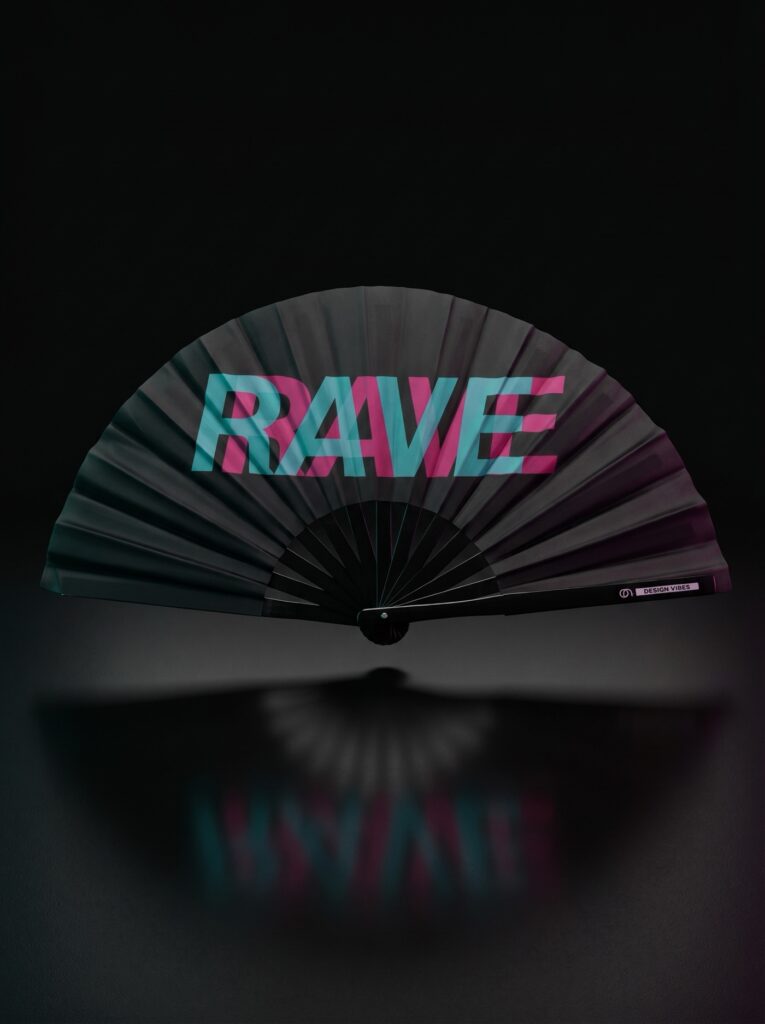
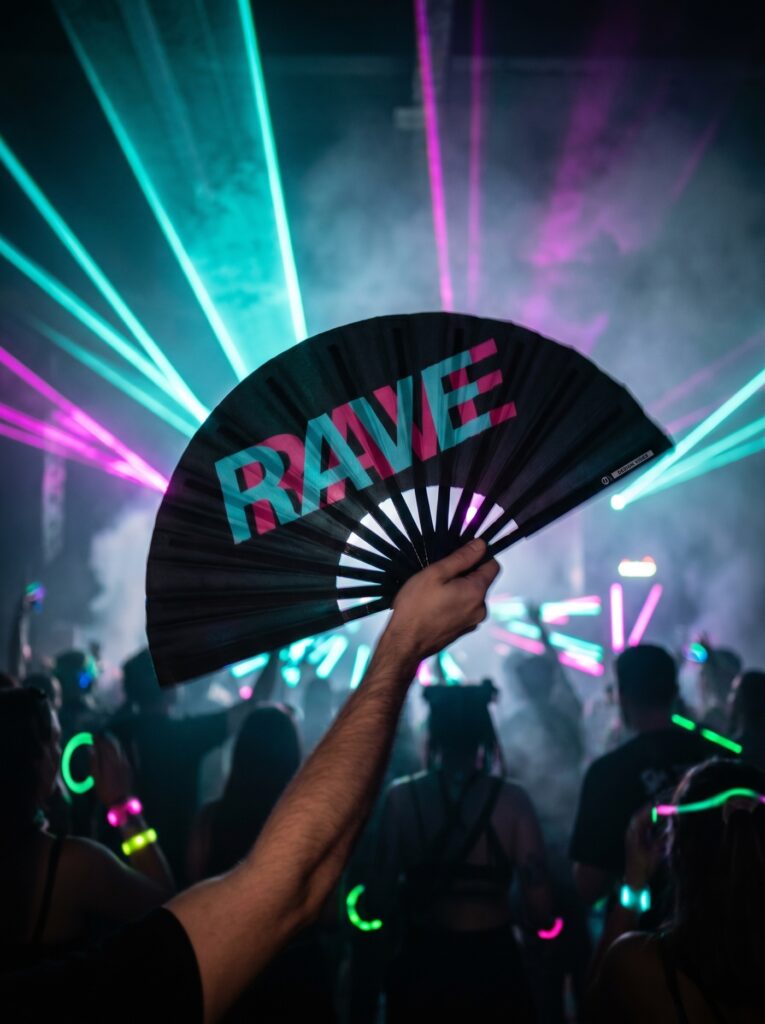
What really helps: open all the entrances early to create a draft, use the awning or a light-colored tarp to provide shade, and turn stagnant air into moving air. This is exactly where the Festival Fan goes from being an accessory to a lifesaver: with a 64-centimeter span, two or three swipes of it bring more air through the tent than any towel-waving ever could. The bamboo frame with its tear-resistant fabric can withstand constant use, and it’s easy to carry along on the way to the stage. Anyone who’s ever fanned themselves in a tent at nine in the morning understands why it belongs on every festival packing list.
The second key to beating the heat is timing: If you know you’ll have to get up at nine, either head to your tent early or make sure to schedule a nap in the shade of the pavilion. Breakfast before the heat of the day, water by your bedside, a cap and sunscreen within easy reach: That’s how you turn a hot morning into a relaxed start to the festival day instead of a panicked escape from your own bedroom.
Tearing Down, Trash, and the Tent Festival Checklist
On the last day, you’ll see who really knows how to handle a festival. Pack up your tent as dry as possible and hang it up right away when you get home, otherwise, it’ll get moldy. Collect all the tent stakes, put the trash in bags, and return the deposit items. A tent left behind isn’t a donation, it’s bulky trash with poles, and after you’re gone, the field becomes someone else’s home: for animals, for farmers, and for the next festival.
Plan to spend an hour more on packing up than you think you’ll need, and go over this list before you leave:
- Tent with tent stakes, ropes, and a rubber mallet; set up once for a test run
- A sleeping pad and sleeping bag suitable for the season
- Earplugs and a sleep mask
- Water, non-perishable snacks, and trash bags
- Fanny pack for ID, cards, and cell phone
- Armor Tape and Power Bank
- Sunscreen, a cap, and a rain jacket
- Fans to beat the morning heat, long lines, and sweating in the crowd
That’s all there is to it: a smart spot, a comfortable sleeping setup, good neighbors, and a plan to beat the heat. You’ll learn the rest out in the field, and that’s exactly why you’re there. If your kit is still missing the tools to beat the morning heat: Designs ranging from holographic to statement pieces are waiting for you in the shop, shipped from Hamburg and ready to ship within 24 hours. Your tent will still get hot. But this time, you’re prepared. Ready to pick yours? Our homepage is the place to start for your next hand fan.