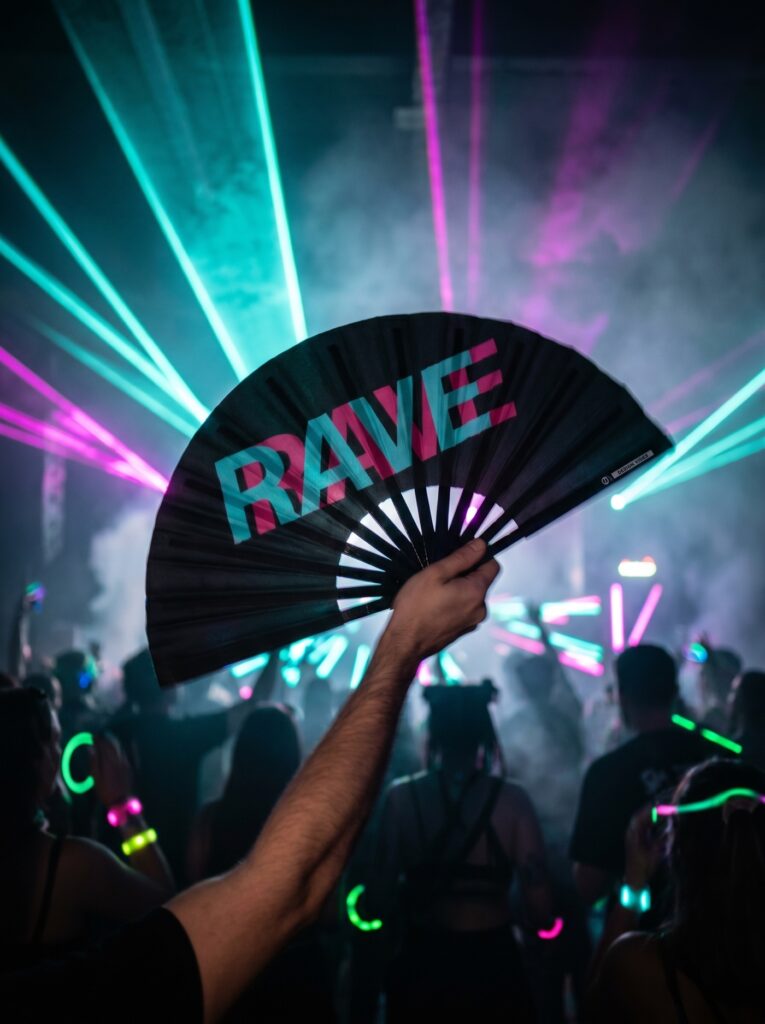

A concert outfit has to do more than just look good: It has to withstand two hours in line, survive the dash to the front row, get sweaty during the encore, and still look good in a cell phone video. Unlike at a festival, you only have one night, one venue, and no chance to change clothes in your tent in between. That’s exactly why it’s worth putting some real thought into your concert outfit. Here’s the complete guide.
First, the short version for those in a hurry: comfortable, broken-in shoes, breathable base layers, a removable layer for the line, and a small bag with ear protection and fans. If you just follow these five points, you’ll be better prepared than most people in the venue. For everyone else, here’s the in-depth breakdown.
Concert Outfit vs. Festival Look: The Key Difference
For a festival, you pack for three days and all kinds of weather, our festival packing list provides the foundation for that. For a concert, it’s the opposite: one evening, usually indoors, often with a coat check. That changes everything. You don’t need a rain jacket just in case, you need an answer to one question: How do I survive the line outside and the heat inside without lugging around extra weight?
The second thing to keep in mind: In an arena or club, you’re packed shoulder to shoulder, and the air conditioning is no match for ten thousand bodies. While there’s at least a breeze at an open air venue, the air in the stands is stagnant. So your outfit needs to do one thing above all else: regulate body temperature.
The question of genre isn’t about style criticism, it’s about practicality: Every audience moves differently, and your outfit should match the expected movement. At a pop concert, people sing and sway; at an indie club, they jump around; and at a Techno show, they dance the night away. Here are the three most common scenarios and their guidelines.
Outfit Formulas by Genre: What Goes Where
The Pop Arena
Big venue, big show, lots of glitter in the audience. Here’s where you can stand out: statement pieces, glitter, colors, preferably coordinated with the artist’s era or album. The formula: an eye-catching top, comfortable pants or a skirt with cycling shorts underneath, paired with flat shoes. Many arenas have strict bag policies, so pack light.
The Indie Club
A small store, sweaty walls, everyone on the move. The formula: a shirt or TOP that can get wet, sturdy pants, and shoes that can take a beating. Better casual than fancy, because after three songs, everyone here looks the same: happy and drenched in sweat.
The Techno Concert
Somewhere between a concert and a Rave: Live performances by electronic artists draw crowds eager to dance. Black is the safe choice; mesh and functional pieces are standard, and if you want to make a statement, go for reflective or holographic fabrics. You’ll find matching statement accessories in the Techno & Rave category.
Footwear: The Inconvenient Truth
No part of your concert outfit will be put to the test quite like your shoes. Let’s be honest: an hour of waiting in line, three hours of standing and dancing, plus the walk there and back. That’s five to six hours on your feet, on hard ground. The rule: closed-toe, broken-in shoes with cushioning. No new sneakers, no open-toed sandals in the crowd, and no heels you can’t stand in for three hours. If you want to jump along up front, you need soles that can handle it.
One more thing about timing: If you want to get in line early to be at the front, you’ll be standing there for hours, so you should plan your outfit accordingly. For the front row, the strictest version of all the rules applies: don’t wear anything that will become a burden after four hours without a seat, and don’t bring anything you can’t wear on your body the whole time.
Two more shoe tips to save the evening: fresh socks with a little cushioning work wonders, and a pair of gel insoles doesn’t cost much but turns any flat sneaker into a tool fit for a standing concert. Anyone who’s been there knows: you won’t notice the difference by the second song, but you will by the twelfth.
Layering: Cold outside, sauna-like inside
The eternal dilemma: At 5 p.m., you’re standing in line in the wind; at 9 p.m., you’re crammed into a raging crowd. The solution is to think in layers. Start with your base outfit, something light enough that you won’t overheat inside. Then add a layer for the line, and here there are two strategies. Strategy one: a jacket that you drop off at the coat check, if there is one and the line there is manageable. Strategy two: an old, lightweight layer that you tie around your waist and can sacrifice if necessary.
Pro Tip: A thin spare shirt in your bag weighs nothing and makes the trip home after a sweaty concert much more comfortable, especially during the colder months. Sometimes, the difference between catching a cold and having a great evening is nothing more than a dry shirt.
Small bag, clear priorities
Many venues only allow small bags; some only allow bags that are A4 size or smaller. Here’s what you really need to bring:
- Ticket and ID, debit card, or some cash
- Cell phone and a slim power bank
- Hearing Protection: Your ears should be allowed to ring after the concert, but not have to
- Spare shirt, rolled up tightly
- The fan: when folded, it’s as slim as a cell phone; when opened, it measures 64 cm, a lifesaver
Here’s a practical tip regarding bags: Check the venue’s website beforehand to find out the bag policies. Nothing is more frustrating than finding out an hour before the doors open that your backpack isn’t allowed inside and the lockers are already full. When in doubt, remember: jacket pockets plus a small bag will avoid any hassle at the entrance.
The Fan: The Arena Rescue in Concert Attire
Now for the most underrated part of a concert outfit. The air is stifling in the stands of a sold-out arena, and it’s even hotter in the front row right in front of the stage. A fan with a 64 cm span moves more air than any smile from the program booklet, and it doesn’t need a battery or an outlet. The bamboo frame and tear-resistant fabric can withstand even a wild encore, and when folded up, it fits into even the smallest bag.
Then there’s the performance: A holographic or glittery fan catches the stage lights and makes you part of the show, and the Clack as you open it is applause with style. Take a look at the Festival Fan collection: From subtle to bold, it has everything that fits in an arena.
The encore belongs to everyone. The best air in the front row belongs to the person with the fan.
That leaves the question of the merch: Should you wear your newly purchased tour T-shirt right at the concert, or not? The honest answer: Do whatever makes you happy. From a practical standpoint, there are good reasons to wait until you’re on your way home to put it on, then it serves as both a dry spare shirt and a souvenir. Two problems, one solution.
Etiquette: Looking good is also a matter of consideration
A word about courtesy, because good concert attire goes hand in hand with good behavior. Huge hats, signs held high, and arms held out for extended periods of time block people’s view. The same goes for fans: held in front of your face or at chest level, they don’t bother anyone, but holding them above your head during a song does. Raising them briefly during the drop or the final applause is totally fine, but put them back down afterward. And if you’re filming, keep it brief: the show is right in front of you, not on your screen.
That leaves the question of the weather on the way home. If you’re traveling by bike or on foot, be sure to pack a thin hat during the cold months: a sweaty head plus the night air is a classic recipe for catching a cold after a concert. It sounds like advice from parents, but it’s true nonetheless.
Frequently asked questions about concert outfits
What should I wear to a concert?
Comfortable, worn-in shoes, a breathable base layer, a layer you can leave at the cloakroom and a small bag with ear protection and a hand fan. Your top depends on the genre: eye-catching in a pop arena, tough and easy-going in an indie club.
What should I wear to an indoor concert in winter?
Dress in layers: a warm layer for the queue outside that you hand in at the cloakroom, with a breathable top underneath. A packed hall heats up fast, even when it is freezing outside.
What are the best shoes for a concert?
Flat, worn-in shoes with a firm sole that you can stand and jump in for two hours and that can take being stepped on. You will regret new or high shoes by the encore at the latest.
Bottom line: One night, one outfit, zero compromises
The perfect concert outfit is a balancing act between genre, location, and temperature regulation: comfortable shoes as the foundation, layering to handle the temperature difference between the line and the venue, a small bag with the five essential items, and a fan that serves as a handbag-sized air conditioner. Once that’s all set, you can focus on what you came for: the moment when the lights go out and the first note makes everything else unimportant. By the way, “Ready to ship in 24 hours” means that even if the concert is this week, your lifesaver will arrive in time. Find the right hand fan for your next festival day on our homepage.