A rave is a dance party featuring electronic music, usually Techno or house, that often lasts until morning, and where the dance floor is more important than the stage. The word comes from English: “to rave” means to go wild or to be enthusiastic. First-timers usually ask themselves the same questions: What actually happens there, what are the rules, and what should you pack? This guide explains it all, from the warehouses of the late ’80s to today’s festival dance floors.
Contents
What is a Rave? The short answer
At a Rave, DJs play electronic dance music, and the crowd takes center stage. Typical features include long sets without breaks, a powerful sound system, lighting instead of a show, and an audience that comes to dance, not to watch. Raves take place in clubs, at open air events, in old industrial warehouses, or as dedicated stages at large festivals.
What sets it apart from a typical club night is, above all, the attitude. It’s about sharing a moment on the dance floor, about music that builds over hours, and about a scene that takes openness and respect seriously.
Where Did the Rave Come From? A Brief History
Chicago and Detroit: The Music
First came the music. In the mid-1980s, house music emerged in Chicago, followed shortly thereafter by Techno in Detroit. Juan Atkins, Derrick May, and Kevin Saunderson, often referred to as the “Belleville Three”, shaped the Detroit sound with drum machines and synthesizers. Chicago also gave rise to acid house, with the characteristic bubbling bass of the Roland TB-303.
Great Britain: the word
In the United Kingdom, acid house became a mass phenomenon in 1988; to this day, the scene refers to that summer as the “Second Summer of Love.” The parties moved from clubs to warehouses and open fields, and the term “Rave” became established for these nights. Politicians responded: The Criminal Justice and Public Order Act of 1994 allowed the police to break up open-air parties featuring music with “repetitive beats.”
Berlin: The Space
In Germany, the scene found its niche after the fall of the Berlin Wall. Empty buildings in East Berlin were turned into clubs, and in 1991, the Tresor opened in the vault of an old department store. As early as July 1989, the first Love Parade drew a crowd of about 150 people down Kurfürstendamm. In the 1990s, it grew into one of the world’s largest techno parties.
What happens at a Rave?
A night like this doesn’t follow a set schedule with breaks. DJs play sets ranging from one to several hours; the transitions are seamless, and the music builds tension, releases it, and builds it up again. People dance freely, without set choreography: each person on their own, and yet all together.
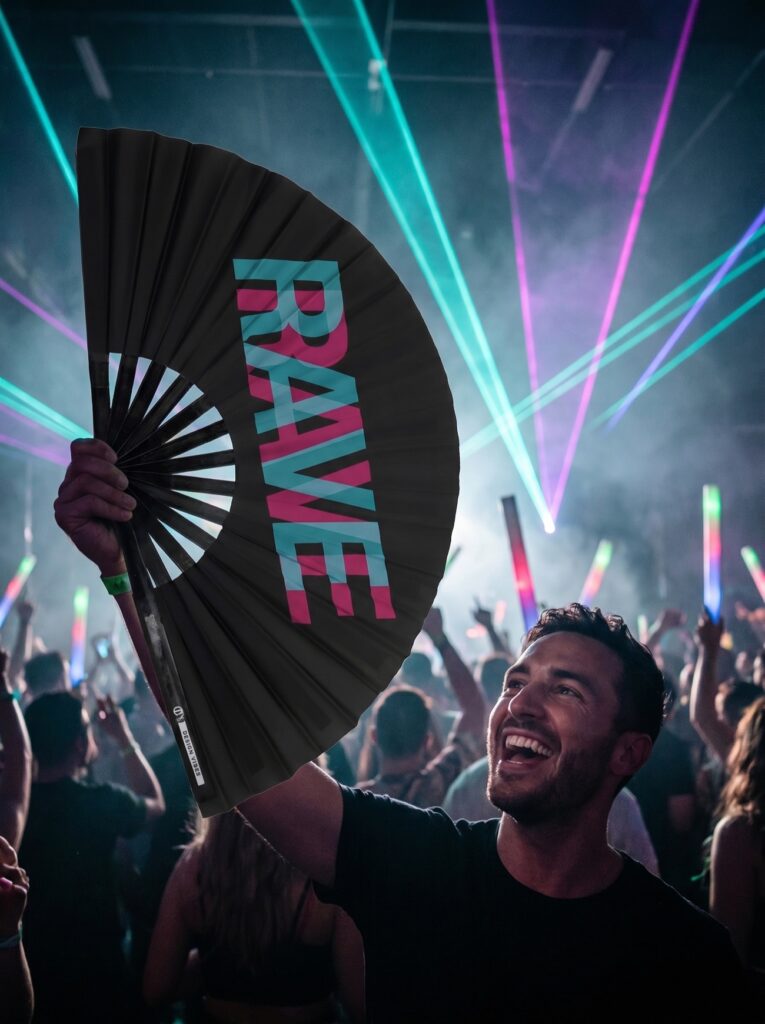
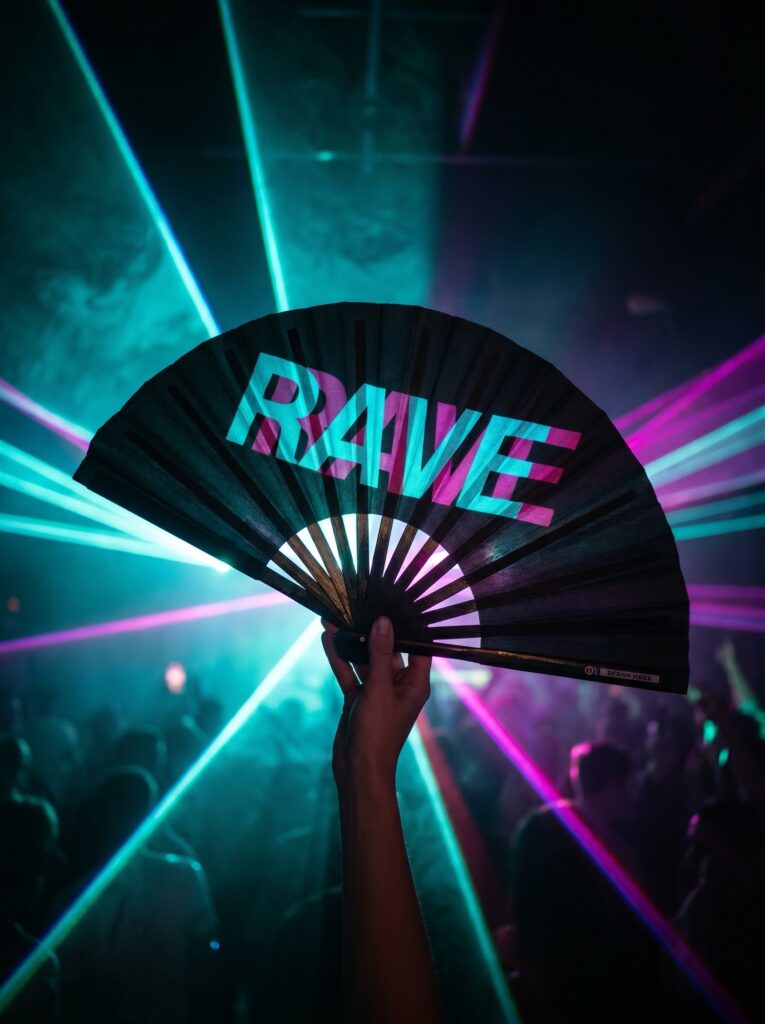
Lighting, fog, and volume are what drive the experience; there’s usually no big stage show. Many come dressed in black, while others wear glitter, fishnet, or costumes. On the dance floor, you’ll also notice a sound you might not expect: the dry “Clack” of large hand fans, which is part of the rhythm in the Techno and Ballroom scenes. Find out where it comes from in our article about the “Clack.”
What kind of music is played at a Rave?
- Techno: driving, repetitive, usually well over 120 BPM. The classic genre in Berlin and at major festivals.
- House: warmer and often featuring vocals, with a slightly slower tempo.
- Trance: melodic, with long builds of tension.
- Drum and Bass: fast breakbeats and lots of bass, significantly faster than Techno.
- Hard Techno: fast, hard, and loud, especially popular with young audiences.
PLUR and the Unwritten Rules
An acronym that originated in the U.S. Rave scene of the 1990s is still quoted by many today: PLUR, which stands for Peace, Love, Unity, Respect. Behind it lie a few simple rules that apply at every good Rave:
- Respect and Consensus: No one is touched, filmed, or hit on without their consent.
- Leave space: Everyone dances within their own space; groups don’t form barriers on the dance floor.
- No cell phones allowed: Many clubs cover up the cameras. The same rule applies elsewhere: film less, be present more.
- Awareness: If you or someone near you is not feeling well, please speak to the Awareness Team or the staff.
- Looking out for one another: The crew comes together and leaves together.
What should I wear to a Rave, and what should I bring?
Comfort beats style. You’ll need shoes you can stand and dance in for hours, clothes that can handle the cold, and a layer for the trip home. Add to that ear protection, water, and a small bag to carry on your person for your ID, money, and cell phone. For more details on what else to pack, check out our Rave Essentials, and for ideas for the colder months, see our Guide to Club Outfits for Fall and Winter.
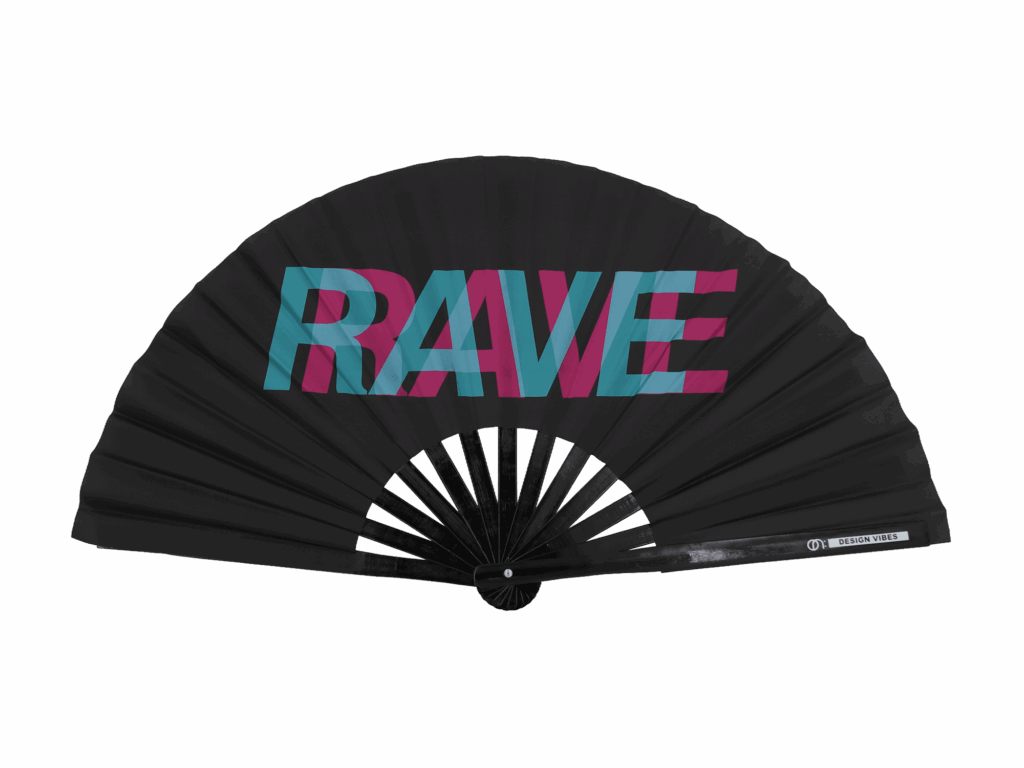
A large fan is a great way to beat the heat on the dance floor. Our hand fans, with a 64 cm span, feature a bamboo frame and a Clack that can be heard on the dance floor. You’ll find dark designs for nighttime in the Techno & Rave category.
Rave, club, or festival: What’s the difference?
A club is a permanent venue with a program on specific evenings. A festival usually lasts several days, has many stages, and often includes a campground. A “rave,” on the other hand, describes the style of partying rather than the venue. Even a club can host a rave night, and festivals like Awakenings or Tomorrowland are, at their core, a series of raves held on a single site.
Frequently Asked Questions
What does the word “Rave” mean?
“Rave” comes from the English verb “to rave,” which means to go wild, to gush, or to fantasize. In the late 1980s, the term became widely used in the United Kingdom to refer to parties featuring acid house and Techno, which often took place in warehouses or outdoors.
How long does a Rave last?
It depends on the venue. Club raves often run from midnight until morning; some clubs stay open all weekend long. At festivals, the raves take place over several days.
What does PLUR stand for?
PLUR stands for Peace, Love, Unity, Respect. The acronym originated in the U.S. Rave scene of the 1990s and continues to describe how people interact with one another on the dance floor.
Why do ravers carry fans?
A large hand fan provides instant relief from the heat on a hot dance floor and is also part of the look. Add to that the Clack, the loud snap when it opens, which is part of the rhythm in the Techno and Ballroom scenes.
In the end, a Rave is simpler than its reputation suggests: good music, a loud sound system, and people who want to dance together. If you show up with respect, bring ear protection and water, and are open to long sets, you’ll fit right in on any dance floor. And when it gets hot, you’ll already have your fan in your pocket.