The tickets are booked, the lineup is on repeat, and somewhere between the anticipation and the trip itself, the question that comes up every season arises: What are you going to wear? In 2026, a festival outfit is more than just clothes. It’s the answer to who you want to be between the main stage and the campground, for three days, in thirty degrees, dust, and strobe lights. The good news: This season’s trends are clearer than ever. The even better news: The piece that really makes your outfit stand out isn’t a jacket or a pair of sneakers, it fits in any fanny pack.
Festival Outfits for 2026: These Trends Are Shaping the Season
This year’s biggest trend comes from the functional side of things: utility and techwear have finally made their way onto the festival grounds. Cargo pants with real, functional pockets, vests with loops and carabiners, lightweight shells that keep out the rain and keep you warm at night, the look says: I’m prepared for anything. What used to look like something out of an outdoor catalog is now the foundation on which the rest of the outfit is built. The advantage is both practical and aesthetic: You carry less, have your hands free, and still look like you put some thought into your outfit.
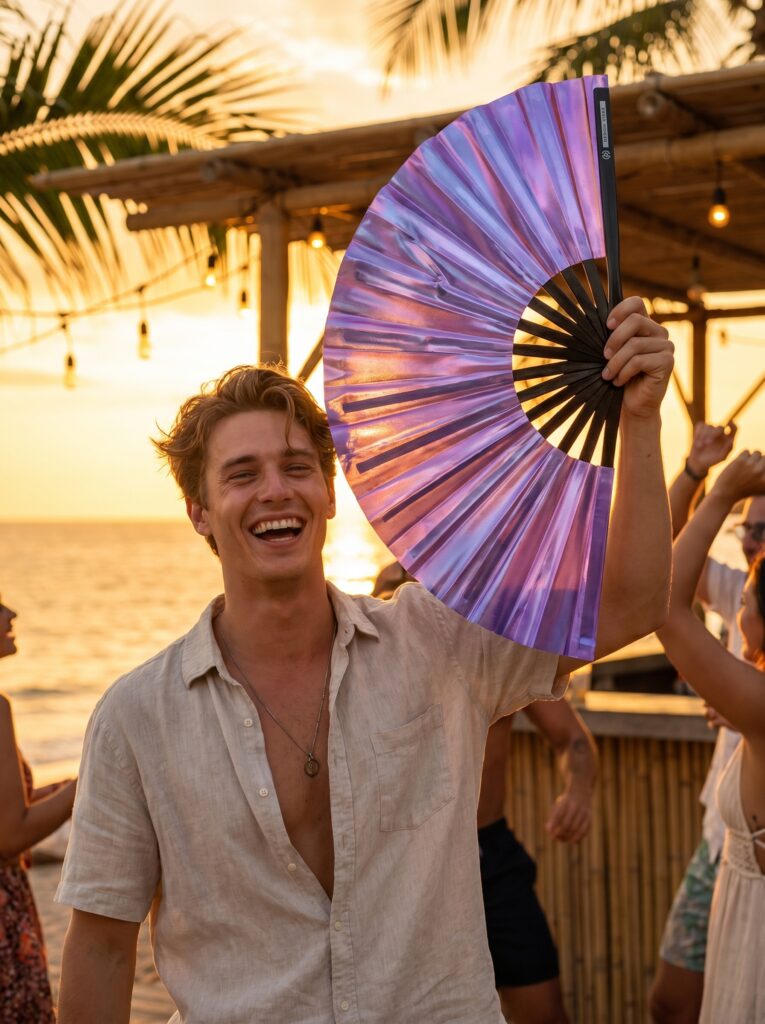
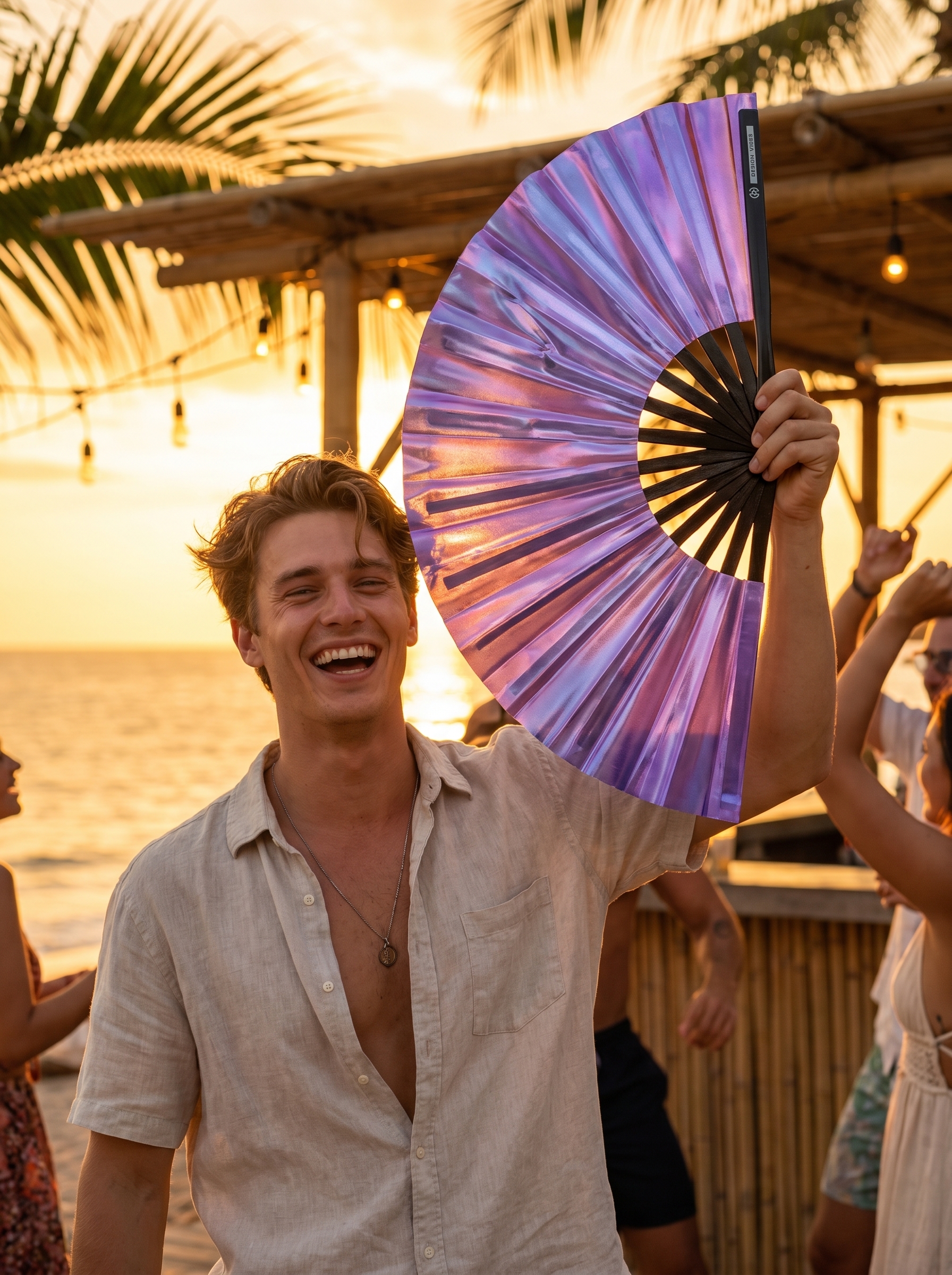
Second major trend: metallic and holographic. Reflective surfaces, iridescent fabrics, chrome details, anything that refracts light works. The reason is obvious: festivals are light shows, and an outfit that works with the light instead of absorbing it automatically becomes part of the show. During the day, it glitters in the sun; at night, it reflects lasers and LEDs. Important to note: In 2026, metallic is an accent, not a full-body costume. One holographic piece per look is enough, any more and it quickly starts to look like Carnival.
Third: the statement piece principle. Instead of ten mediocre pieces, in 2026 the crowd will wear a simple base piece plus one item that ties everything together, a pair of eye-catching glasses, a unique necklace, or an accessory with character. This makes your looks easy to replicate: the base stays the same, the statement piece changes, and every day at the festival looks different, without needing a second suitcase.
And fourth, less prominent but everywhere: secondhand as the foundation. The foundation of festival outfits is increasingly coming from flea markets, vintage stores, and one’s own closet. It’s more affordable, more sustainable, and more authentic, and it takes the pressure off having to buy a completely new look every season. New purchases are made selectively: that one piece that makes all the difference.
Outfit Formulas: A Festival Outfit for Every Vibe
Not every festival calls for the same look. Here are three styles you can adapt depending on the weekend:
Main Stage: loud, colorful, photogenic
In front of the main stage, it’s okay to shine. The formula: a light or colorful base, a metallic or glittery accent, and comfortable shoes that can handle a little dust. Add sun protection that complements the look rather than detracts from it, a cap, sunglasses, and an accessory that looks good in photos. It’s all about the long-distance effect here: whatever looks good from ten meters away wins.
Techno-Floor: dark, functional, minimalist
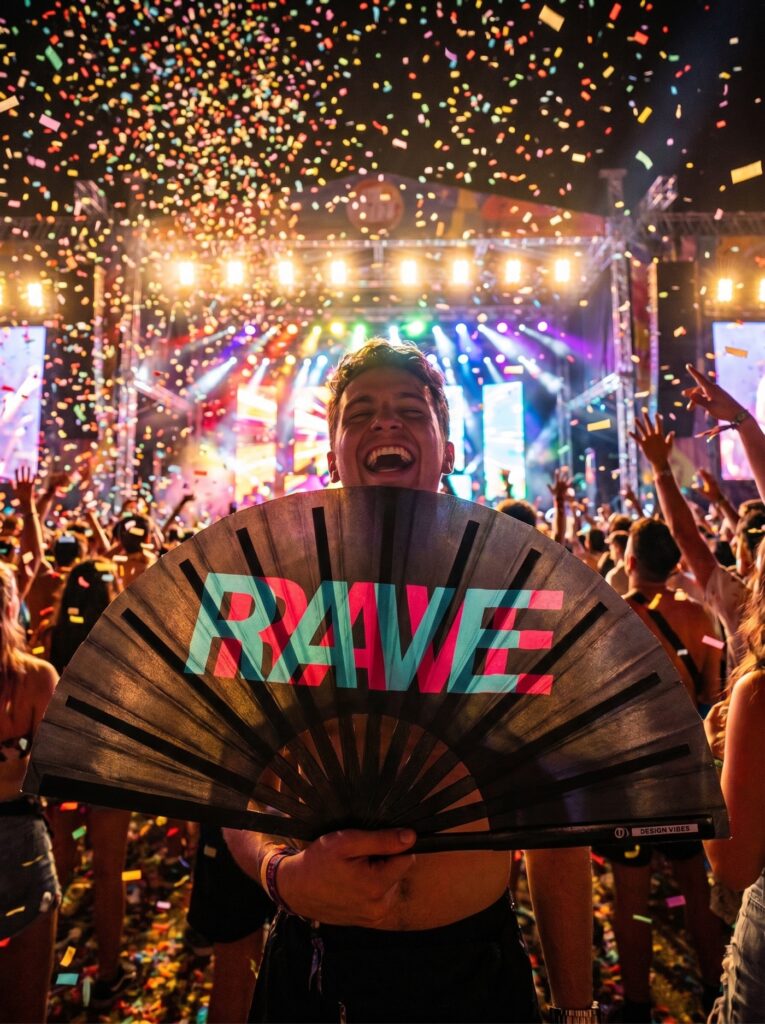
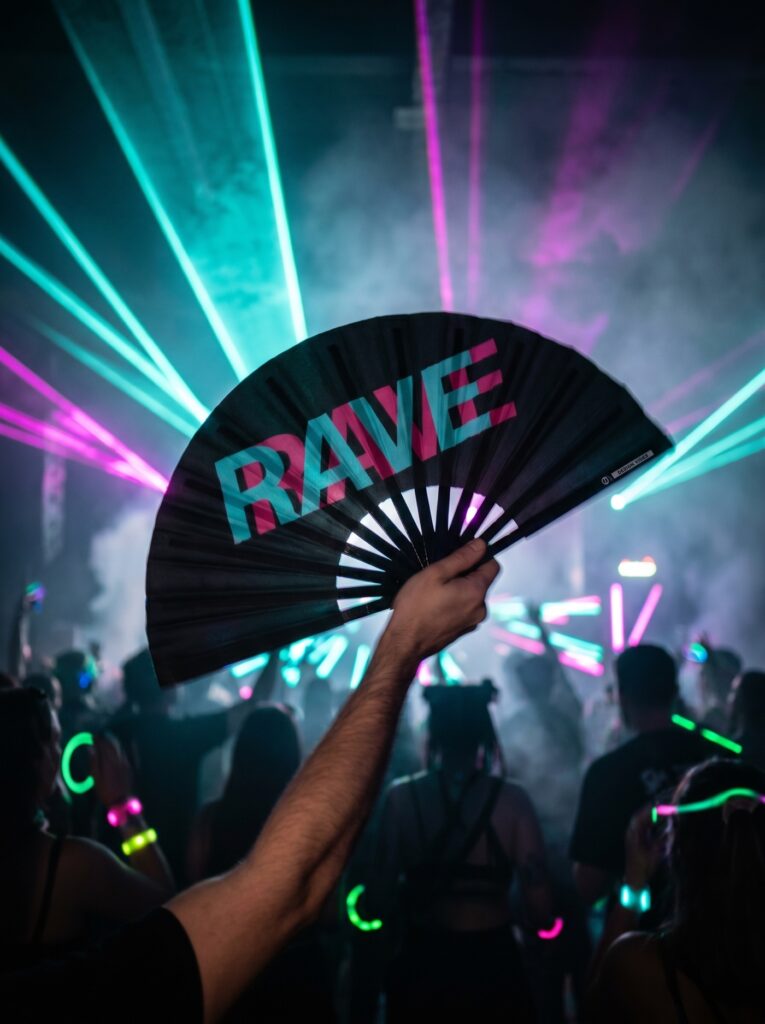
On the dance floor, the logic is reversed: black is the base, functionality is a must, and accents come from texture rather than color. The formula: breathable black, cargo pants or shorts, a fanny pack worn across the body, paired with a single detail that reflects light. If you want to stand out from the crowd here, don’t do it with color, do it with texture, mesh, chrome, or holographic effects.
Pride: Color with Attitude
At Pride festivals, your outfit is a statement. The formula: a rainbow as an accent or a solid color, paired with anything that creates visibility. Here, a statement and style can be one and the same, the clearer the stance, the better the look.
Why Festival Accessories Make or Break an Outfit
The honest truth about festival looks: After day one, all the basics look the same. Dust, sweat, and the campground take their toll on even the best pair of pants. What remains are the festival accessories, the pieces you deliberately chose and that still say who you are, even on the third day. Accessories are also the most versatile items in your luggage: they weigh nothing, take up no space, and can transform the same basic outfit into three different looks. And they’re the part of your outfit that sparks conversation. No one will comment on your black pants, but they will on a unique accessory.
The hand fan: the one accessory that stands out
Among all festival accessories, one has a special status in 2026: the hand fan. It’s the rare item that can do three things at once. First, its function: When opened, a Festival Fan has a 64-centimeter span, it’s not just for decoration, it actually cools you down, right in the middle of the crowd where not even a breeze can reach you. Second, style: The surface area of an open fan is larger than any T-shirt design, and it moves, a design on a fan is a design in action. Third, the sound: the Clack as it’s opened. A loud, crisp snap that’s considered applause in Ballroom culture, and at a festival, that’s exactly what it is: an audible exclamation mark.
You can see a good outfit. You can hear a good statement, the Clack reaches your ears before anyone has even seen you.
Add to that what you only notice about the fan at second glance: a bamboo frame, tear-resistant fabric, built to withstand three days of outdoor use, not to sit in a display case. That’s exactly what sets a statement piece apart from a gimmick.
Color Combinations: Which Fan Goes With Which Outfit
The choice follows the same logic as the rest of the outfit: Either the fan serves as an accent against a neutral background, or it picks up a color from the look. If you’re going for a dark base, opt for holographic and metallic designsthey bring the show’s glow into your outfit. For colorful main stage looks, choose glitter and galaxy designs that complement the look rather than competing with it. As a rule of thumb:
- All-black outfit: holographic or metallic, maximum contrast, maximum light reflection.
- A colorful, bright outfit: glitter or a galaxy print in a color that’s already part of the look.
- Utility and techwear looks: cool tones, silver, chrome, staying true to the functional vibe.
- Pride Looks: A rainbow on your fan, the rest of your outfit can stay simple.
- When in doubt: The fan can be louder than the outfit. The other way around, it gets tricky.
Practical Tips: Heat, Dust, Night
Heat: Plan your festival outfit for the hottest part of the day, not for when you look in the mirror in the morning. Layers you can take off beat any single “perfect” piece. A fan isn’t a substitute for sunscreen, but it makes the hours in front of the stage bearable, and it works exactly where fan gadgets have long since run out of power.
Dust: Light-colored shoes are a thing of the past after two hours, and so are delicate fabrics. Everything you wear should be able to withstand a layer of dust, and accessories with smooth surfaces can be easily wiped down in the evening.
Night: After sunset, reflectivity is key. Metallic details, holographic panels, and anything that reflects light will keep your outfit visible when colors fade into the darkness. And keep the temperature in mind: The jacket you curse during the day will save your evening at three in the morning.
In the end, the best festival outfit for 2026 isn’t one you copy, but one you put together yourself: a secondhand base piece, a trendy element, and a statement piece that combines function and style. You probably already have the basics in your closet. The statement piece, ready to ship from Hamburg in 24 hours, is the smallest yet boldest decision of the entire season. Ready to pick yours? Our homepage is the place to start for your next hand fan.